
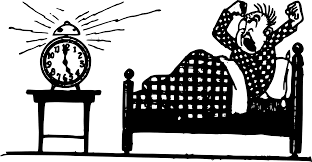
The alarm clock is a forgotten mechanism in today’s technological world — with your cell phone you can do it all!
But after all, what is the advantage of having an alarm clock separate from your cell phone?
Currently on your cell phone you probably already receive thousands of messages, videos, notifications and who knows what else…
One of the advantages of having a separate alarm clock is not having to keep separating what is a notification from an alarm to wake you up. The notifications filled me with dread and stress for the day ahead before I even had my breakfast.
The alarm with its shrill, piercing screech is effective in waking me up every morning. And besides, it doesn’t fill my mind with conversations, bad news, and deadlines before the day starts.
Change of Habits
I switched from alarm clock to phone about 10 years ago after telling someone what I thought was a funny story about how my alarm clock had gone off once in my suitcase while in the trunk of a taxi, forcing us to stop for that we could recover it. The joke caused bewilderment. “Do you really use an alarm clock?” they asked me, as if it were a fax.
“Why don’t you use the phone?” I thought. “Why not me?”. He probably didn’t even know he could do it at the time.
But I succumbed to peer pressure and got rid of my old watch. And there ended the luxury of waking up without notifications, and the misery of looking at them in the middle of the night when checking the time on my phone began.
As our cell phone usage continues to grow (a 2018 Deloitte report found that US smartphone users check their cell phones 14 billion times a day, up from 9 billion in the same 2016 report), experts in well -being say it’s having a negative impact on our morning routines.
“When you wake up in the morning, ideally you want to wake up and spend a little time inside your own mind before you get bombarded with everything that’s going on in the world. Give yourself a chance to adjust to the waking world,” says mental health and wellness expert Lily Silverton. “Historically, we haven’t been used to being taken away from us as much as we are today.”
Before alarms, it was roosters, church bells, knockers (people who were paid to wake you up by banging on the door or window with a long stick, something that happened until the 1970s in industrial Britain) and even our own bladders that us out of bed.
Clockmaker Levi Hutchins of Concord, New Hampshire, is believed to have invented one of the first alarm clocks in 1787. Its design only went off once at 4 am, his preferred time to wake up. Little seems to be known about the details of the actual project, but he wrote: “What was difficult was the idea of a clock that could sound an alarm, not the execution of the idea. It was the very simplicity of ringing the bell.”
It was years later, in 1874, that French inventor Antoine Redier became the first person to patent an adjustable mechanical alarm clock. And in 1876, Seth E. Thomas patented a small wind-up mechanical clock in the United States, prompting major American watchmakers to begin making small alarm clocks. Apparently, German watchmakers soon followed suit, and in the late 19th century, the electric alarm clock was invented.
Today, alarm clocks have a huge number of designs. From the Panasonic RC-6025 clock radio, immortalized in the 1993 film Groundhog Day, to more retro designs from classic brands like Roberts. A quick search on Etsy reveals new designs in the form of robots, owls or even rabbits.
On the other hand, the most modern designs include the incorporation of colored night lights, projectors (to project the time on the ceiling or on the wall), speakers with USB ports, temperature and humidity control and even bed shakers in teen test.